
 Apple Podcasts

 Spotify

 iHeartRadio

 Pandora

 Youtube Music

 Amazon Music

 RSS Feed

 Goodpods
 PlayerFM
 Deezer
 Podchaser
Healthcare Direct Contracting Market Disruptors - Matching High Quality Providers with Employees Easier and with Cost Savings for All | Sanenta CEO Sareena Mann and COO Daniel Hess
Send us Fan Mail Sanenta: Sanenta.com Episode # 166: Healthcare costs keep climbing, but most employers still can’t answer a basic question: what are we actually paying for care, and is it a fair price? I sit down with Sanenta co-founders Serena Mann (CEO) and Daniel Hess (COO) to unpack how direct contracting can replace guesswork with clear, usable healthcare price transparency for self-funded employers. If you’ve ever looked at renewals rising year after year and wondered where the money g...
Sanenta: Sanenta.com
Episode # 166: Healthcare costs keep climbing, but most employers still can’t answer a basic question: what are we actually paying for care, and is it a fair price? I sit down with Sanenta co-founders Serena Mann (CEO) and Daniel Hess (COO) to unpack how direct contracting can replace guesswork with clear, usable healthcare price transparency for self-funded employers. If you’ve ever looked at renewals rising year after year and wondered where the money goes, this conversation gives you a concrete path from claims data to actionable savings.
We walk through how Sanenta’s two-sided marketplace works, from negotiating provider rates tied to CPT codes to helping employers or brokers shop contracted services like imaging, physical therapy, behavioral health, and more. Serena and Daniel explain how they match provider options to employee ZIP codes, how they benchmark utilization through TPAs, and how their recommendation engine helps employers find the biggest opportunities without having to become healthcare experts overnight. We also dig into a critical piece that gets ignored too often: the employee experience. Their model can be designed so employees pay zero out of pocket for direct contracted care, creating a real incentive to choose the better-value option.
You’ll also hear the startup story behind the product: validating demand on both sides of the market, navigating broker distribution, and solving the chicken-and-egg problem with an on-demand provider onboarding process. Then we shift into leadership and finance, including how they divide responsibilities, how they think about incentives in complex markets, and what they look for in future finance leadership as they scale.
Please connect with me on:
1. Instagram: stephen.mclain
2. Twitter: smclainiii
3. Facebook: stephenmclainconsultant
4. LinkedIn: stephenjmclainiii
For more resources, please visit Finance Leader Academy: financeleaderacademy.com.
Stephen is an experienced Finance Professional and Leader who offers fractional CFO services and development opportunities. Please visit his LinkedIn profile or Finance Leader Academy for more information.
The views and information shared on The Finance Leader Podcast are intended solely for educational and informational purposes. They do not constitute financial, accounting, tax, legal, investment, or other professional advice. Always seek guidance from a qualified professional before making decisions related to your specific circumstances.
00:00 - Introduction And Guest Setup
01:18 - Meet The Sonenta Co-Founders
02:20 - Direct Contracting Marketplace Explained
05:02 - Validating Demand And Early Insights
07:49 - Proving Savings And Employee Experience
11:52 - Startup Vision And Dividing Responsibilities
16:58 - Solving Chicken-And-Egg With On-Demand
21:45 - Leadership Lessons And Learning Incentives
25:10 - Startup Finance Approach And First Hire
30:34 - Personal Habits Plus What’s Next
34:24 - Closing Thanks And Listener Actions
Introduction And Guest Setup
Stephen McLain
This week I am sharing an interview with the co-founders of Sonenta.com, CEO Serena Mann and CEO Daniel Hess. Sonenta provides direct contracting between healthcare providers and employers. Please enjoy the episode. Welcome to the Finance Leader Podcast, where leadership is bigger than the numbers. I am your host, Stephen McLain. This is the podcast for developing leaders in finance and accounting. Please consider following me on Twitter, Facebook, Instagram, and LinkedIn. My usernames and the links are in this episode's show notes. Thank you. Now this is episode number 166. Now let's get right to the discussion with Serena and Daniel. Please enjoy. I want to welcome Serena Mann, CEO of Sonenta, and Daniel Hess, the COO of Sonenta to the Finance Leader Podcast. Serena and Daniel are co-founders of Sonenta, a healthcare infrastructure company helping employers move from claims data to direct contracts with high-quality healthcare providers. Serena and Daniel, thank you for joining me today. I am deeply interested in the topic you will be sharing with us today, and we want to hear more about you.
Meet The Sonenta Co-Founders
Stephen McLain
So please tell us about yourself. Serena, you can start. Thank you.
Sareena Mann
Yeah, thanks for having us here today. Super excited for this as well. Some background on myself. Yeah, I start I started CineNta with my co-founder Daniel, but my background was actually in surgical robotics, which I studied electrical engineering and computer science at UC Berkeley, but really was passionate about making healthcare more transparent. So I took I dropped out of Berkeley to start CNNT with Daniel.
Stephen McLain
Oh, very interesting.
Sareena Mann
Yeah.
Stephen McLain
Daniel, tell us about you.
Daniel Hess
I was both interested by Serena. She reached out to me. I had like a previous setup in real estate, uh, which was servicing surfacing off-market options to potential buyers. And I saw this as an opportunity to surface uh potential options to employers and to people that want to buy healthcare. So it was pretty easy to do the step.
Stephen McLain
All right. Well, thank you. Uh, we definitely want to hear about CineNta.
Direct Contracting Marketplace Explained
Stephen McLain
So for listeners hearing about CNNT for the first time, what kind of problem does it solve and what does a customer do with the platform?
Sareena Mann
Yeah, so what CNENTA is is essentially this to so it solves a problem of like price transparency in healthcare. A lot of the times employers are buying healthcare insurance, but they don't actually know if this is a fair price for that service. And essentially, CNNT is aimed at helping servicing those transparent pricing and actually lowering the cost of healthcare spends for self-funded employers. From a user experience side, it's like this two-sided marketplace. So, on one hand, we're approaching healthcare providers from imaging centers, physical therapists to hospital networks. We're negotiating that rates for certain CPT or service codes. And we essentially publish that on our marketplace where employers can either shop our marketplace directly if they already know, hey, I want to layer on direct primary care or imaging onto my plan and give my employers more local personalized care. Or we analyze their claims, their usage, and we benchmark, we show them cost savings of, hey, if you were to direct contract with this provider in this that services your local employee group, this is the savings that you'll be that will yield for your health benefits plan.
Stephen McLain
Oh, wow. Oh, that's amazing. Could you walk us through a typical customer experience?
Sareena Mann
Yeah. So tip so right now our customers are self-funded employers. At the very least, we require their census data. We can work off of that alone. Census data, we just look at their zip codes where exactly their employees are located. And from there, we can match providers from they can either shop our marketplace for behavioral health, like, hey, I want to offer better mental health benefits to my employees. And they can shop our marketplace and essentially add healthcare providers to their shopping cart, already knowing up front what this will cost them. Or they can we can work with their existing third-party administrator, get their claims data, analyze it, analyze how efficient and their utilization with their current network. And then from there, we can layer on top direct contracts, work with their third-party administrator, get those rates recognized and seamlessly integrate it into their current plan.
Stephen McLain
Oh, wow. I think I can see some huge benefits to employers out there and to the employees, which is uh which is very important. I'm very curious. Then what did you need to validate before you built out this service, before you went live?
Validating Demand And Early Insights
Sareena Mann
Yeah, so from we kind of jumped into this with two feet. We saw that renewals for for employers can are increasing at 10, even to 20% year after year. And so Danielle and I, we came together and we realized there had like employers are desperate for op other options to reduce cost. And we actually stumbled upon the concept of direct contracting, direct contracting through Mark Cuban. He has like a Mark Cuban cost plus wellness program where he open sources. Right, right,
Speaker
yeah,
Speaker 1
some of his direct contracts. And he's a huge proponent of it. And it seemed like it aligned with both of our values where you should know for every other service or product you buy, you know exactly what the value is and what you would get out of it. So why can't like healthcare be the same? And essentially, direct contracting was is a really hot topic right now, but the problem is the workflow to get it integrated into your plan is very fragmented, and that's the problem that Senenta also solves.
Stephen McLain
Okay, that's awesome. I want to hit it one more time just to make sure everyone understands. But who is your typical customer? Who's coming to you?
Speaker 2
Yeah, our typical customer is usually a company between 50 to maybe over 1,000 that is usually self-funded. Currently, our best customers are in Texas, but we're able to, because of our on-demand model on our platform, we're able to work nationwide.
Speaker
Okay. Now, what is one assumption that you changed after hearing from your customers after getting this live and getting this out there and working with them? What did you change? Or if you changed anything?
Sareena Mann
That's a good question. I'd say, like Daniel could talk about this as well as actually our like not so much on the product side, but on our like go-to-market side. When we were originally reaching out to our early customers, we were primarily targeting like CF, CFOs, HR, HR benefits leaders, and to essentially sign up for a platform by themselves. But we realized that a lot of the times that we actually needed to target like a broker because the broker handles a lot of the health benefits administration. So we started instead of targeting the employer side directly, we started targeting like brokers as a distribution channel to employers. So I'd say that's an assumption that we had to change earlier on. Yeah.
Speaker
Okay. Dan, you want to add anything to that?
Speaker 2
Yeah. And moving forward, I mean, in this business, it's all about reaching as many lives as possible. So we're looking to work with TPAs and bigger brokerages to really, you know, give the like expand this benefit to as many employee lives as possible. So that's the current uh mission we're working towards.
Proving Savings And Employee Experience
Speaker
But I want to highlight again how do you make a difference in the market? Why why would someone why would someone want to come to you? And then of course, could you walk us through that process from identifying an opportunity to implementing a contract?
Speaker 1
Yeah, so I guess right now a lot of our competitors either have a dire are direct contracting platforms for a certain niche, like for imaging, physical therapy, or for a certain state only they have direct contracts operating for. But and it's also for our competitors, you have to shop the market yourself. So you have to know exactly what regions you want to, you want to find direct contracts for what services. But Sedenta, we we do all of that for you. So we have our own recommendation, recommendation, ongoing recommendation engine. You don't have to know exactly what procedures, what services are going to yield the biggest cost savings. We'll find that for you and we'll notify you when a new provider, a new opportunity pops up. So it's this ongoing recommendation engine for direct contracts. And we also cover a wide variety of services. So we can bundle together different services for you. Like certain, for example, we can have we can find a DPC practice that's as well and bundle it with like imaging practice as well. So it's not just this one, yeah, it's not just this one niche.
Speaker
Okay, amazing. But so how can an employer tell the difference between a lower contracted price and a savings that actually materialize, you know, while also considering access to care and also the employee experience?
Speaker 1
Yeah, so to understand like if this will yield a cost savings, we the way we go about it is we look at your your CPT code, your spend trends throughout the month, where it's projected to go, the volume of services for a specific, like for a specific service or CPT code, and we project that onto the prices that we have in our marketplace. So we can show that cost savings. On the employee side of things, they get their own dashboard through CNNTA where it tells them the summary of all benefits contracted through CNNta, where to find care, where to schedule care. Right now we have it so that employees pay zero out of pocket. So the employer so it incentivizes them to actually utilize the direct contracted service. So all of that is summarized in their employee-facing dashboard.
Speaker
Wow. Okay. I want you to say that one more time. You're talking about zero cost, zero co-pays? Is that what you're
Speaker 1
doing? Yeah, the employer would swallow the price because our negotiated rates are sometimes two to three or more times less than what they would pay originally.
Speaker
I mean, so that's the incentive right there.
Speaker 1
Yes, yeah.
Speaker
So it so it's a win, it looks seems like it's a win-win across the board for the employee and the employer.
Speaker 1
Yes, it is, yeah.
Speaker
Okay, so what so why isn't this more why isn't this more why isn't this popping up more?
Speaker 1
That's a good question. Yeah. Again, it's because the currently direct contracting is very fragmented. You have to before Sedenta, you would have to go to one vendor to analyze claims, another vendor or a few other vendors to actually find healthcare providers to direct contract with, and then all of this could happen via email, calling, et cetera. Negotiating with the hospitals is another like fiasco in itself. And so Cedenta, we do all of that work for you. And also sometimes there is friction that we have with brokers because not every broker wants to actually reduce cost of claims because some of the broker commission is based on how much spenditure they're actually yielding for their employers. Like they take a commission on expenditure. So sometimes there's those misaligned incentives with the broker. But yeah, those are the primary reasons why this we see we do see direct contracting taking off this in the next few months to a year.
Speaker
Wow. Okay. I can really see where this is gonna, this is gonna take off. I can't wait to see this.
Startup Vision And Dividing Responsibilities
Speaker
Obviously, you guys are a startup, and you know, here on the on the finance leader podcast, we'd love to talk about leadership, and I love to also talk about startups. So I want to get into a little bit about your both of you, your your your take and your experience on how to lead a successful startup, you know, when it comes to forming a team. So describe to me when you when you started to think about this and you wanted to do this, tell me about what your vision was.
Speaker 1
Yeah, I think the vision for Cinenta is to be the gold standard for direct contracting. So whenever we're I essentially Cinehenta would be synonymous with direct contracts, is the is the vision, and to make it the process as seamless as possible. But our values are to make healthcare more transparent, more local, and give employers like same day to next day visits, more quality care as well. So that's our vision with the startup, and I think really holding on to that vision has allowed us to keep pushing.
Speaker
Daniel, what do you think?
Speaker 2
Yeah, I think I mean we are we are basically all about transparency and like making this as easy as possible. So I mean, in our uh LinkedIn BIOS, it's like we're trying to make uh like direct contracting made super easy. So I mean that's basically our motto, and we're trying to really like make sure that it's true. So
Speaker
right now, how did you guys decide how to divide up the responsibilities?
Speaker 1
Yeah, I think it it came pretty naturally. At first, we were both on all the meetings together, doing doing all of the technical work, all the outreach work, but I think like Daniel and I, we have our own strengths and weaknesses, and it made like Daniel's really great at like go-to-market, marketing, finance. And I'm good at like I have that overall like product vision, tailoring the product to the needs of the customers I'm talking to, the providers I'm talking to. So it kind of it really came naturally, and I'm just yeah, I'm super lucky to have found Daniel. I think we're also great like personality-wise, but our strengths and our weaknesses complement each other really well.
Speaker
That's a good point. That's a good point. You have to like be able to work off of each other, work off of each other's strengths, and then help each other through. So there's some other couple of very detailed questions that I have for you, of course. But once you committed to the idea, now what were those first assumptions? I asked you probably a few minutes ago about this particular thing, but what were the first assumptions you needed to test with the customers or the providers?
Speaker 1
Yeah, that's a good question. I mean, the first assumption we had to test is if anyone would actually want a direct contract, if this is not just like a hot topic moment for it, but it's going to die down in a few years. And we had, I mean, in the last few months, we probably had nearing 170 to 200 conversations with like brokers, providers. And in all those conversations, there was a clear, there was a clear need on both the provider side of things and the employer side of the equation. So on the provider side, there a lot of providers are moving towards direct pay, cash pay models because they're
Speaker
tired
Speaker 1
of haggling with like an insurance carrier to get paid within a reasonable amount of time. And so direct pay, direct contracting allows them to have more control of the costs that they would like to have control over what they feel is appropriate for their services as well as faster payments. And then on the employer side, they're getting like hammered with renewals increases year after year. And so direct contracting is a way for them to really take control of their budget and their health benefits budget.
Speaker
Okay. Daniel? Anything to add? Yeah.
Speaker 2
Yeah. Yeah, I mean, absolutely. I mean, we needed to test if like if they're willing to pay for it, if there is a need. And like with every meeting we basically had, I mean, people are actually like telling us that there's like a huge, huge need in the market. And like we didn't we had pretty good meetings, so it was like it wasn't like we were trying to like convince them. It was you actually like they're they were trying to like encourage us to like keep building this because like they see so much potential, but still like in in this space there is like so many misaligned in incentives uh with like brokers uh in a space. So uh they just really wanted us to you know key building it and make sure like uh succeed succeed with this because there were some of these like big companies that tried to go into healthcare, but they ultimately failed. So yeah,
Speaker
yeah, absolutely. So again, let's go back to a startup and trying to figure out your priorities. Now, how what if you what what happened when or if you guys had different priorities? Walk us through that and how you figured out how to what to what to go after first. What was your process?
Solving Chicken-And-Egg With On-Demand
Speaker 1
Yeah, I guess from my side of things, right now we have two, we essentially have two types of customers or people we need to get on our platform, which are providers and then brokers, employers. So we had I we initially struggled on okay, what side do what side of the marketplace do we onboard first, do we prioritize first? Because on the employer side of things, the problem we were having is they love the idea, but we didn't have enough providers in their area. On the other side, when we were contacting providers, a lot of them were asking how many lives we had covered. So it's kind of this chicken or the egg situation. But then like Daniel had this really great idea of like an on-demand model for sourcing providers. So essentially, we may not have if you're an employer or broker that joins our platform and we don't have providers in a such in a state that we haven't targeted, such as Idaho is a state we don't have providers in, then we will take your census, which is an easy upload. We can see the zip codes of your employee base, and we can on demand reach out to providers in your area within like a 50 or more mile radius, add them to our platform. And we really, we really nailed our onboarding of providers process. The turnaround time is anywhere between a day to a week to get providers onto our platform. So this on-demand model really helped us with that chicken or the egg situation because we can we can get providers notify you when an opportunity arises. We don't need to have those providers already in our platform. Exactly.
Speaker
What you just described, how fast is the turnaround on that?
Speaker 1
Yeah, I mean, if you you could sign up right now as a healthcare provider on our platform, it would take two to five minutes. We don't ask for much, we just ask for your licensure, your NPI, and your rates. So to sign up, the process is two to five minutes. It's just like reaching out, getting these agreements signed for like bigger hospital networks. We've pretty much nailed down our agreements. It could take about a week to get signed.
Speaker
Oh, wow. Okay. So if an employer, again, your example, you use Idaho, and you have a new employer in an area that does not have this coverage or service. What's the turnaround time typical now, since you've got a lot of stuff in place? The turnaround time to get them coverage, what what's that, what's that look like?
Speaker 1
Yeah, like I said, about one to two weeks, we could get coverage in there where their employees are located.
Speaker
That seems fast.
Speaker 1
Um
Speaker
obviously you've you've improved your process. You probably took a little while and you've you've you've improved your your how you attack those kind of things. Is that right?
Speaker 1
Yes, yeah.
Speaker
Yeah. How much how much have you got how much of this is automated and how much you're still doing manually?
Speaker 2
Yeah. I mean, I would say like mostly like reaching out to providers, like, you know, we have some automation on the site uh via email, but still when it comes to like calling them, you know, doing the back and forth with the contracts and everything, it's still pretty much manual, but like we're working on automating this part as much as we can as well, so that it's seamless for us and uh both for the provider. So I think this is probably the most manual, manual part, reach out to providers, adding them on our platform. And if maybe if you know they have some feedback or something, like we will have to like take it ourselves. But that's that's a part every startup has.
Speaker
Okay, yeah, excellent. No, so from your startup experience, you know, not necessarily in the specific industry or model you're in, but what do you most focus on every day? What what's what when you when you wake up ready to go to work, what are you focused on?
Speaker 2
Yeah, um, I mean I can start uh I mean yeah, basically, I mean we have sort of in the morning, I mean we have a lot of usually meetings because uh we're in Pacific time, but most of our customers or a lot of meetings we have uh are for example in like the Texas uh the central central time zone. So in Texas, for example, so we usually go into like like right off the bat, like when we start a morning, we basically go into the meetings. Then if we have like some slots between the meetings, we call like providers or we basically like reach out to them. Then you know after let's say like 2 p.m. Pacific time, we basically go into the mode of like taking all that feedback from from basically our all of those meetings, analyzing all the emails that like we received, and then basically you know try to improve the product, you know, go on like a team meeting basically, hands-on, and basically try to like tailor the strategy and everything. So we basically to take this a little bit of time and like then work basically till till the evening.
Speaker
Okay, excellent. Now I want to hear from both of you.
Leadership Lessons And Learning Incentives
Speaker
Serena, you can start on this next question. Now, what are the key leadership lessons that you've learned from your startup experience?
Speaker 1
Yeah, that's a good question. I think I learned a lot from Daniel because Daniel is really great. I like get Just like shooting his shot with like brokers, providers getting ourselves into these meetings. Like Daniel and I, we don't have a we don't have experience in the insurance space or the benefit space before this. So when we were just starting out, I was a bit shy or like question if I if we even should be reaching out to these big brokerages. They're gonna think we're like stupid or dumb or naive in these meetings because we don't know much about it. But I think from Daniel, from just throwing out our idea out there into like the free market essentially and letting it that shape our product, I learned that you kind of have to it's you kind of have to just throw yours put yourself out there and see where it goes because you can either like not open those doors for yourself and you don't know if your product is good or your product is something people want. So it's really just learning how to put yourself out there. And
Speaker
yeah,
Speaker 1
like Danny and I, we have we're really rooted in our vision. And as long as we're rooted in our vision, the product can will shape itself from there.
Speaker
So it sounds like you have walk in with no fear, no regret. I'm gonna I'm gonna show off what I have to offer. And I and if it doesn't maybe work today, I'm gonna go and start back up again tomorrow and not worry about it. So I'm gonna keep going, keep grinding, right?
Speaker 1
Yeah, that's something I've definitely learned from Daniel, especially. Yeah.
Speaker
Daniel, you want to add onto that?
Speaker 2
Yeah, yeah. I mean, it was an absolute pleasure to work with Sarina because I mean she's very good. Uh I mean, I I maybe I'm probably good at getting those meetings, but Sarina's very good at getting the value out of those meetings. So I think there's the complementary value aspect again. Yeah, I mean, and there's been so many things that because of how we complement each other, we we've been able to basically do that otherwise wouldn't really take off. So
Speaker
uh so I you you talked about not knowing a lot about the insurance industry or the healthcare industry, but the beginning, right? But it seems like you seem like you've been doing this forever.
Speaker 1
Okay,
Speaker
when you were talking earlier about your your depth of knowledge seems really vast. So how did you I mean how did you learn all this stuff? If you said you started off with not really knowing a lot about the industry, how did you learn it all? It sounds like you're an expert to me.
Speaker 1
Yeah, I mean, I don't I don't think it's like that hard to there's just a lot of like jargon and a lot of like there's a lot of like acronyms, etc. that you have that mean this may mean the same thing as a different acronym. So I think it's really honestly wrapping your head around those words, that is the hardest part of understanding the insurance space.
Speaker
And then also
Speaker 1
under yeah, and honestly, the the incentives in the insurance space really and the benefit space is what shapes it. So once you understand those basic incentives, how people are paid, et cetera, then you pretty much have a complete understanding of how the space works.
Speaker
So I think that's the key for anybody going to a startup, find those incentives
Speaker 1
in
Speaker
your market or industry and go after that. I think that's a key part of it.
Speaker 1
Yes, yeah.
Startup Finance Approach And First Hire
Speaker
I definitely of course, again, this is a podcast for you know developing finance and accounting professionals. And we weren't going to end this without talking about the finance and accounting systems and processes that you have. So I just want to uh dig in just a little bit, especially on the startup side. Now, between the two of you, who owns the finance function today?
Speaker 1
Yeah, it's definitely Daniel.
Speaker 2
Yes, okay.
Speaker
Okay, so okay. I'm sure you guys both discuss your your your finance, your your where you stand, your cash flow, your financial statements, and so forth. And what I really want to know is what information do you review to make decisions about spending or hiring or growth? Talk us through that, especially from that startup experience.
Speaker 2
Yeah, I mean, we're still like early stage startups. So basically, you know, we had some opportunities when it came to like fundraising earlier, but we had like delayed it, delay it a little bit because uh we're we're like a two-person team, but we're working as like a 10-person team. So like hiring a person would probably, you know, we would want to do a good job in in that process. So we had to like delay it a little bit because it would you know slow things down when it comes to like getting some CRM or something like that. Uh you know, we're very very AI native. So at this moment, like uh the the context we have with AI is basically replacing the CRM for us. So we're very much it's very much interactive for us. So when it comes to like all the like finance infrastructure, all these things uh yeah, I I think like we're trying to push it, push it off for later because we think we can uh we would have like figure like the best practices maybe when it comes to and also if if when it comes to like finite like financing investors and stuff like that, it would also take some time to like you know review all the like conditions and really like form like a round or something. So
Speaker
yeah, exactly. So what kind of financial or operating measures are you using to guide your decisions? Is there anything in the in the financials when you look at your uh the transactions you've done and the decisions you need to make, cash flow and so forth, is any any particular measures you're using to help guide you, or are you still a little bit early in this process?
Speaker 2
Yeah, I I wouldn't say we have when it comes to the like the finance side. I mean, we're still like an early estate startup, so we're still like burning more than we are making uh at this moment. But uh Yeah, I mean for us, we're still not like the biggest startup when it comes to the like finance infrastructure, so we don't need it. So I mean, but we're definitely like looking to like establish it as as time goes. But at this at this moment, like we have not many reasons to actually we don't have that many incentives to actually do it.
Speaker
Sure, absolutely. So but as you eventually as you continue to grow, now what particular skills you would be looking for in a finance or accounting person, particularly accounting, that you that you would be looking for to when you do your first hire on your team to take over? You know, you know, the the startups are always when do I bring on my first uh CFO or my or a bookkeeper or or an accounting professional to help me take on that role. What particularly you'll be looking for and how does that support your vision? What will you be looking for in that prefer in that person?
Speaker 2
Yeah. I think in like a CFO, I mean we got actually some offers. You know, some people you know offered themselves as a CFO to us. So I mean, we I mean we would be definitely looking for a senior seniority of the CFO person. To be honest with you, I mean I didn't go really into depth with with the C like with what CFO exactly does. Uh, I mean, absolutely there is the accountant side, there is the like getting the finances and all these things together. You know, I I think for us, I mean we're trying to like really be focused on on the on the business, on the product, on on the scaling side, which finance is absolutely part of it. But I think we're we're just starting to move in into it. So we're we're just basically in a face of like learning more about the finance side. So
Speaker
you don't have
Speaker 2
all that much screen.
Speaker
Anything you want to add to that?
Speaker 1
Yeah, I mean, I think the biggest thing when it comes to getting hiring a CFO or anyone in the C-suite is making sure that their incentives align with ours because we like Daniel mentioned, we've been approached by people who who want to take on like equity help us in that position. But it was really it really comes down to like, and they were did have that seniority and that like ability to execute for us and help us scale, but it also comes down to like making sure the company the like core teams, values, and missions align with that of our goals to offer the bet to work with employers and providers and make sure our incentives are aligned with both those groups.
Speaker
All right. That sounds good. I like that.
Personal Habits Plus What’s Next
Speaker
We want to get to know both of you just a little bit more before we close out. So would like Serena, we'd like to know do you have a favorite book or TV show or hobby that you like to do? Can you tell us a little bit about what you do in your personal time?
Speaker 1
Yeah, I guess for me, a big hobby I used to have was triathlon. I did that in like my first few years at Berkeley. It was really fun experience, but I couldn't stand like sitting on a bike for more than three, four hours. It was but it's fun. It was fun. I'm not a great swimmer, but I really love the running side of things.
Speaker
Okay, are you still doing workouts that to like like you're training up for one? Are you still doing daily workouts like that?
Speaker 1
No, I'm not training. I don't I'm not training for a triathlon. That takes a lot of commitment and a lot of time. I'm trying to squeeze in some workouts here and there just to like break break up meetings or something, but I haven't been. I have to be more like uh disciplined about it.
Speaker
Okay, gotcha. Daniel, tell us a little bit about you. You like to do in your personal time.
Speaker 2
Yeah, I mean, there's a lot of things. You know, I'm like a person that like does a variety variety of things. So I could be playing tennis and then on a side doing some martial arts. So
Speaker
it's like
Speaker 2
it's very much it's very like broad, it's very broad for me. So I'm trying I don't probably have like a specific sport that I would be like that would be like my top favorite, but I have like a lot of different sports that I do that you know I love probably the variety of sports, like doing interesting things, and that's probably like what I love about the activities. Like
Speaker
okay, great. You guys uh both are in the physical improvement space as far as like the stuff you're doing in your spare time. So I think that's great. Now, where can listeners learn more about Sonenta? Where can we find you?
Speaker 1
Yeah, so first our website it's Sonenta S A-N-E-N-T-A.com. So if you're an employer, a broker, or a provider, or just a listener that's interested in our product, you can go ahead and check out our platform and create a profile for free. There's no subscription fee, upfront subscription fee to get started. You can also check out our LinkedIn, which is just our company name as well, and our personal social medias will probably you'll see them on our personal LinkedIn, will
unknown
be
Speaker 1
like where we posted on those accounts as well. We post a lot on LinkedIn about our how we're progressing as a company,
Speaker
our
Speaker 1
vision, a recap of our week. So you can definitely see live updates on our progress from there.
Speaker
All right. Now, what's next for Sonanta?
Speaker 1
Yeah, so right now we are scaling pretty fast on our provider side of things. We're looking to, we're looking at partnerships with some big healthcare aggregators out there to make sure we have more bigger national coverage. And we're also have some potential like partnerships with some bigger brokerages as well to get more lives under our belt. But really what's next is to become like the gold standard of direct contracting and help employees and employers gain more control over their expenditure and the care that they receive.
Speaker
Awesome. Daniel, you want to add anything to that?
Speaker 2
Yeah, I think you know, right now I'm focused, like going expanding a lot of lives, you know, making sure that the capacity is right and this because of the scaling. And yeah, I mean really scaling the life number. Yeah. That's
Speaker
all right. Awesome. Well, Serena, Daniel, thank you so much for joining me today on the Finance Leader Podcast. I wish the best for both of you and your company. I think you're gonna really make a big difference in the marketplace, big a diff, big difference for employers and the employees out there. So I'm looking forward to seeing what you guys are gonna do in the future. Thank you so much for joining me.
Speaker 1
Yeah, thank you so much.
Speaker 2
Thank you so much.
Closing Thanks And Listener Actions
Speaker
Now, I really enjoyed my time with Serena and Daniel. I learned a lot about the healthcare direct contracting market. I can't wait to see how they grow Sonenta into an amazing success. Please visit Sonenta.com for more information. The link is in this episode's show notes. Thank you again to Serena and Daniel for joining me on the podcast. Good luck to you both and to Sonenta. I hope you enjoyed the Finance Leader Podcast. If this episode helped you today, please share with a colleague and leave a review. Please check out Finance LeaderAcademy.com for more resources and for ways that I can help you and your team. And now go lead your team, and I'll see you next time. Thank you.
CEO
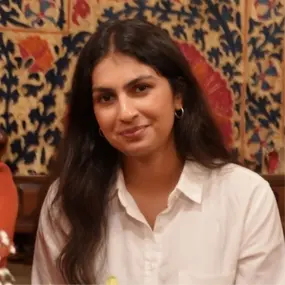
Sareena Mann is the co-founder and CEO of Sanenta, a healthcare infrastructure company helping employers move from claims data to direct contracts with high-quality healthcare providers.
Before Sanenta, Sareena studied electrical engineering and computer science at UC Berkeley, where she worked at Berkeley AI Research and the AUTOLab on robotics, medical imaging, and autonomous surgical systems. She collaborated with surgeons and medical technology teams on applying robotics and computer vision to healthcare.
That experience gave her a technical foundation in healthcare — but also exposed her to a deeper problem: some of the hardest problems in healthcare aren't solved by better technology alone. They require changing how care is purchased and delivered.
Sareena left Berkeley to build Sanenta full-time after seeing an opportunity to make healthcare direct contracting dramatically easier. Sanenta works with employers and their benefits partners to analyze claims, identify opportunities to reduce healthcare costs, and establish direct contracts with local providers at transparent, fixed rates.
Today, Sareena is focused on building the infrastructure that connects employers, TPAs, and providers — making direct contracting practical at scale while giving providers more control over how they price and deliver care.
She is passionate about healthcare, robotics, and building technology that gives people more control over their health and care.

COO
Daniel Hess is the Co-Founder and COO of Sanenta, a healthcare startup building infrastructure for direct contracting between employers and healthcare providers. Sanenta helps self-funded employers and benefits advisors identify opportunities, source providers, negotiate direct contracts, and implement them with existing TPAs. Daniel focuses on product development, operations, partnerships, and bringing more transparent, predictable healthcare purchasing to employers.